home

sitemap

contact us

faqs
International Domain Registration North American Domain Registration Central American Domain Registration South American Domain Registration African Domains Asia Domains European Domains Domain Registration Shopping Cart
 
Price and Requirements for .PP.RU Domain Registration
.pp.ru is not available for registration.
Registration Not allowed by registry at this time
Requirements
.PP.RU Russia Country Information

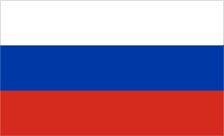
Russia, the Russian Federation, is a transcontinental country extending over much of northern Eurasia. It is a semi-presidential republic comprising 83 federal subjects. Russia shares land borders with the following countries (counter-clockwise from northwest to southeast): Norway, Finland, Estonia, Latvia, Lithuania (Kaliningrad Oblast), Poland (Kaliningrad Oblast), Belarus, Ukraine, Georgia, Azerbaijan, Kazakhstan, China, Mongolia and North Korea. It is also close to the U.S. state of Alaska, Sweden, Denmark, Turkey and Japan across relatively small stretches of water (the Bering Strait, the Baltic Sea, the Black Sea and La Pérouse Strait, respectively).

At 17,075,400 square kilometres (6,592,800 sq mi), Russia is by far the largest country in the world, covering more than an eighth of the Earth’s land area; with 142 million people, it is the ninth largest by population. It extends across the whole of northern Asia and 40% of Europe, spanning 11 time zones and incorporating a great range of environments and landforms. Russia has the world's largest mineral and energy resources, and is considered an energy superpower. It has the world's largest forest reserves and its lakes contain approximately one-quarter of the world's unfrozen fresh water.

The nation's history began with that of the East Slavs. The Slavs emerged as a recognizable group in Europe between the 3rd and 8th centuries AD. Founded and ruled by Vikings and their descendants, the first East Slavic state, Kievan Rus', arose in the 9th century and adopted Christianity from the Byzantine Empire in 988, beginning the synthesis of Byzantine and Slavic cultures that defined Russian culture for the next millennium. Kievan Rus' ultimately disintegrated and the lands were divided into many small feudal Russian states. The most powerful successor state to Kievan Rus' was Moscow, which served as the main force in the Russian reunification process and independence struggle against the Golden Horde. Moscow gradually reunified the surrounding Russian principalities and came to dominate the cultural and political legacy of Kievan Rus'. By the 18th century, the nation had greatly expanded through conquest, annexation and exploration to become the huge Russian Empire, stretching from Poland eastward to the Pacific Ocean.

Russia established worldwide power and influence from the times of the Russian Empire to being the largest and leading constituent of the Soviet Union, the world's first and largest constitutionally socialist state and a recognized superpower. The nation can boast a long tradition of excellence in every aspect of the arts and sciences. The Russian Federation was founded following the dissolution of the Soviet Union in 1991, but is recognized as the continuing legal personality of the Soviet Union. Russia is a permanent member of the United Nations Security Council and a leading member of the Commonwealth of Independent States and the G8. It is one of the five recognized nuclear weapons states and possesses the world's largest stockpile of weapons of mass destruction.


The Russian Federation stretches across much of the north of the super-continent of Eurasia. Because of its size, Russia displays both monotony and diversity. As with its topography, its climates, vegetation, and soils span vast distances. From north to south the East European Plain is clad sequentially in tundra, coniferous forest (taiga), mixed and broad-leaf forests, grassland (steppe), and semi-desert (fringing the Caspian Sea) as the changes in vegetation reflect the changes in climate. Siberia supports a similar sequence but is taiga. The country contains 23 World Heritage Sites and 40 UNESCO Biosphere reserves.

Topography

The two widest separated points in Russia are about 8,000 km (5,000 mi) apart along a geodesic line. These points are: the boundary with Poland on a 60 km long (40-mi long) spit of land separating the Gulf of Gda?sk from the Vistula Lagoon; and the farthest southeast of the Kuril Islands, a few miles off Hokkaid? Island, Japan. The points which are furthest separated in longitude are 6,600 km (4,100 mi) apart along a geodesic. These points are: in the West, the same spit; in the East, the Big Diomede Island (Ostrov Ratmanova). The Russian Federation spans 11 time zones.

Russia has the world's largest forest reserves and is known as "the lungs of Europe," second only to the Amazon Rainforest in the amount of carbon dioxide it absorbs. It provides a huge amount of oxygen for not just Europe, but the world. With access to three of the world's oceans—the Atlantic, Arctic, and Pacific—Russian fishing fleets are a major contributor to the world's fish supply. The Caspian is the source of what is considered the finest caviar in the world.

Most of Russia consists of vast stretches of plains that are predominantly steppe to the south and heavily forested to the north, with tundra along the northern coast. Mountain ranges are found along the southern borders, such as the Caucasus (containing Mount Elbrus, Russia's and Europe's highest point at 5,642 m / 18,511 ft) and the Altai, and in the eastern parts, such as the Verkhoyansk Range or the volcanoes on Kamchatka. The Ural Mountains form a north-south range that divides Europe and Asia, rich in mineral resources. Russia possesses 10% of the world's arable land.

Russia has an extensive coastline of over 37,000 kilometers (23,000 mi) along the Arctic and Pacific Oceans, as well as the Baltic, Black and Caspian seas. The Barents Sea, White Sea, Kara Sea, Laptev Sea, East Siberian Sea, Bering Sea, Sea of Okhotsk and the Sea of Japan are linked to Russia. Major islands and archipelagos include Novaya Zemlya, the Franz Josef Land, the New Siberian Islands, Wrangel Island, the Kuril Islands and Sakhalin. The Diomede Islands (one controlled by Russia, the other by the United States) are just three kilometers (1.9 mi) apart, and Kunashir Island is about twenty kilometers (12 mi) from Hokkaid?.

Russia has thousands of rivers and inland bodies of water, providing it with one of the world's largest surface water resources. The most prominent of Russia's bodies of fresh water is Lake Baikal, the world's deepest, purest and most capacious freshwater lake. Lake Baikal alone contains over one fifth of the world's fresh surface water. Of its 100,000 rivers, The Volga is the most famous—not only because it is the longest river in Europe but also because of its major role in Russian history. Major lakes include Lake Baikal, Lake Ladoga and Lake Onega. Russia has a wide natural resource base unmatched by any other country, including major deposits of petroleum, natural gas, coal, timber and mineral resources.

Climate

The climate of the Russian Federation formed under the influence of several determining factors. The enormous size of the country and the remoteness of many areas from the sea result in the dominance of the continental climate, which is prevalent in European and Asian Russia except for the tundra and the extreme southeast. Mountains in the south obstructing the flow of warm air masses from the Indian Ocean and the plain of the west and north makes the country open to Arctic and Atlantic influences.

Throughout much of the territory there are only two distinct seasons — winter and summer; spring and autumn are usually brief periods of change between extremely low temperatures and extremely high. The coldest month is January (on the shores of the sea—February), the warmest usually is July. Great ranges of temperature are typical. In winter, temperatures get colder both from south to north and from west to east. Summers can be quite hot and humid, even in Siberia. A small part of Black Sea coast around Sochi is considered in Russia to have subtropical climate. The continental interiors are the driest areas.

.PP.RU Russia Domain Name - Country Information
Country Domain
Country Information
TLD Information
 
 
WHOIS Server
Domain Name Renew
 
 
Russia Domain Search Terms:
Russia Domain Name Registration, .PP.RU Domain Revgistration, Russia .PP.RU Domain, Domain Name .PP.RU, Register Chinese Domain, Chinese Domain Names
All Russia Domain Extensions Available
Country Code Top Level Domain designated for Russia
.ru
Second Level Domains - SLD's
.com.ru.int.ru.net.ru.org.ru
Trademark Registration in Russia
 
Russia Trademark Comprehensive Study
 
Russia Trademark Registration Request
 
Russia Trademark Registration Certificate


  International Domain Registration North American Domain Registration Central American Domain Registration South American Domain Registration African Domains Asia Domains European Domains  

See All Asia Country Domain Information - Domain Registration for Asia
RWG DBA Rerun Domain - 101domain.comIana LogoAcepted Credit Cards101domain.com BBBOnLine Reliability Participation Confirmed For Rightway Gate Inc.
Rightway Gate Inc. DBA 101domain.com - Rerundomains.com, 5858 Edison Place Carlsbad, CA 92008
Phone: Toll Free US 1-888-398-4703, Phone: International ++1-760-736-3700, Fax: 1-760-736-3701
Copyright © 1993 - 2008 By Rightway Gate Inc. The Smart Business Online Contact, Last Updated:Thursday, November 13, 2008
Top Market Place Domains
[International Web Address Registration] [International Domain Names] [Domain Name Registration] [Domain Registration Global] [Worldwide Domain Registration]